The closet is bursting, yet there’s nothing to wear. In the morning you stand in front of the open door for five minutes, flipping through thirty hangers, and still pull on the same jeans and the same t-shirt you’ve been wearing all week. It’s not that you have few clothes — they just don’t go together. Let’s figure out how many pieces you actually need to get dressed in two minutes and stop spending weekends shopping.
In short:
– A capsule isn’t “buy 30 new pieces” — it’s 15–20 items that all work together
– The formula: 4 bottoms x 5 tops x 2 layers = 40+ outfits from just 11 pieces
– Start by sorting through what’s already in your closet, not by shopping
Audio version of the article: perfect for the road, while cooking, or on a walk.
{“@context”:”https://schema.org”,”@type”:”AudioObject”,”name”:”Капсульный гардероб: сколько вещей реально нужно и как собрать без шопинга”,”description”:”Голосовая версия статьи.”,”contentUrl”:”https://hervibehub.site/wp-content/uploads/2026/10/podcast-kapsulnyj-garderob-kak-sostavit.mp3″,”encodingFormat”:”audio/mpeg”,”duration”:”PT8M11S”}
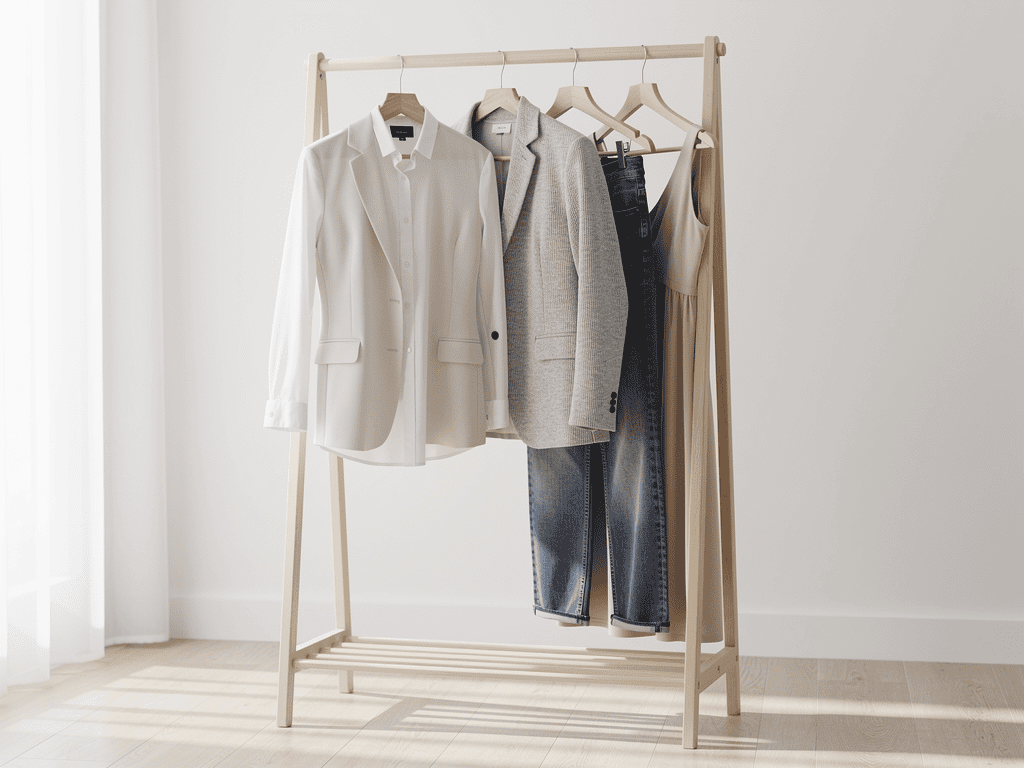
Why your closet is full but there’s nothing to wear
In the morning you stand in front of the open door and flip through hangers. Five minutes later you pull on the same jeans and the same t-shirt you’ve been wearing all week. It’s not that you have few clothes — they just don’t work together.
Every piece was bought separately: this blouse was for the office, this skirt because it was 70% off, these trousers because “someday I’ll lose the weight.” As a result, you have forty items in your closet, and putting together five different outfits from them takes half an hour.
Your brain spends energy on every choice. It’s called decision fatigue: the more options you have, the longer you take to choose and the worse you feel afterward. A capsule wardrobe eliminates this process — in the morning you grab any three pieces, and they already work together.
Another headache: clothes bought on sale. The tag is still on, there’s nothing to wear them with, and you feel bad throwing them away because “it’s still new.” Over a year, a dozen of these pile up, and each one eats up space and attention. It’s not a wardrobe — it’s a graveyard of impulse buys.
Important: a capsule isn’t “throw everything out and buy thirty new pieces.” It’s about building a working core from what you already have.
Do this: before buying a new item, think of three pieces in your closet it would go with. If you can’t name three — put it back on the rack and walk away.
Don’t do this: don’t buy something just because it’s pretty, cheap, or because you “deserve a treat.” A piece with no match is future dead weight.
Counting your capsule: a formula that gives 40+ outfits from 11 pieces
A capsule works on multiplication, not quantity. The point is that every piece goes with every other piece. That way, even a small set gives you dozens of combinations.
Basic seasonal capsule calculation:
4 bottoms (jeans, trousers, skirt, shorts)
x 5 tops (2 t-shirts, blouse, shirt, tank top)
x 2 layers (blazer, cardigan)
= 40 outfits minimum, without repeating
Now compare: an overstuffed closet usually has 60–80 pieces, of which only about 15 actually get worn. Half of it hangs there as dead weight. A capsule of 25 pieces per season beats that number in outfit combinations and takes up a third of the closet space.
Here’s how many pieces you actually need per season:
- Bottoms: 4–5 (jeans, trousers, skirt, shorts or a second pair of trousers)
- Tops: 6–8 (t-shirts, blouses, shirts, tank tops)
- Layers: 3–4 (blazer, cardigan, hoodie, vest)
- Dresses: 1–2 (everyday and dressier)
- Shoes: 4–5 (sneakers, loafers, sandals, boots, heels)
- Outerwear: 2–3 (jacket, trench coat, coat)
That’s 20–27 pieces total, not counting underwear, workout gear, and loungewear. That’s a working capsule. Any more than that — and it’s no longer a capsule, it’s a warehouse.
Compare the two approaches in numbers:
| Parameter | Regular closet | Capsule |
|---|---|---|
| Total pieces | 60–80 | 20–30 |
| Actually worn | 10–15 | everything |
| Outfits | 15–20 | 40+ |
| Time getting dressed in the morning | 15–20 minutes | 2–3 minutes |
| Money per season | impulse shopping | 3–5 planned pieces |
Do this: count your closet using this framework. If you have more than ten bottoms and only two layers — there’s your answer for why outfits don’t come together.
Don’t do this: don’t chase a round number like “exactly 30.” A capsule adapts to your life, not the other way around.
Building a capsule from what you already have
The main secret: you don’t buy a capsule, you assemble it. Buying a list from the internet won’t work, because that list was written for someone else’s life and someone else’s body. Here’s a step-by-step process that takes one weekend.
- Pull everything out onto the bed. Yes, everything. From the closet, the dresser, the bags under the bed. Until you see the full volume with your own eyes, you won’t grasp the scale.
- Split into four piles. “Wear constantly,” “haven’t worn in over a year,” “doesn’t fit,” “needs repairs.” Ruthlessly and without sugarcoating.
- Move everything you haven’t worn in 12 months out of sight. Put it in a box and stick it on the balcony. If you don’t reach for it once during the season — donate it.
- Define your base palette. Two neutral colors that suit you (beige, gray, black, white, navy) plus one or two accent colors. Your whole capsule gets built within these boundaries.
- Photograph your outfits. Put together 10–15 ready looks, photograph each one, and save them to a separate album on your phone. In the morning, just open the album and pick.
That’s it. One weekend — and you have a working wardrobe without spending a single penny. The route is simple: sorting into piles → palette → outfit photos → buy what’s missing. No magic, just your hands and some hangers.
Do this: only buy what’s genuinely missing according to the formula. Usually it’s 3–5 pieces: one layer, one bottom, a couple of tops.
Don’t do this: don’t throw everything out on an emotional impulse the first evening. Pieces you feel bad about — into the balcony box, not the trash.
Checklist: 7 base pieces that pull everything else together
Some pieces are workhorses. They go with almost everything and rescue even weak combinations. Here are the seven that any capsule starts with.
- A white shirt or t-shirt. Works with jeans, skirts, and under a blazer.
- Straight-leg jeans. Blue or black, no rips or rhinestones — a universal bottom.
- Dark trousers. Classic, for work and going out.
- A blazer or cardigan. One layer that turns a t-shirt into an outfit.
- A basic dress. Solid color, wearable with both sneakers and heels.
- White sneakers. Go with everything except an evening gown.
- A trench coat or denim jacket. An outer layer for in-between weather.
If your closet has at least five of these seven — your base is already built. The rest is a matter of combinations, not purchases.
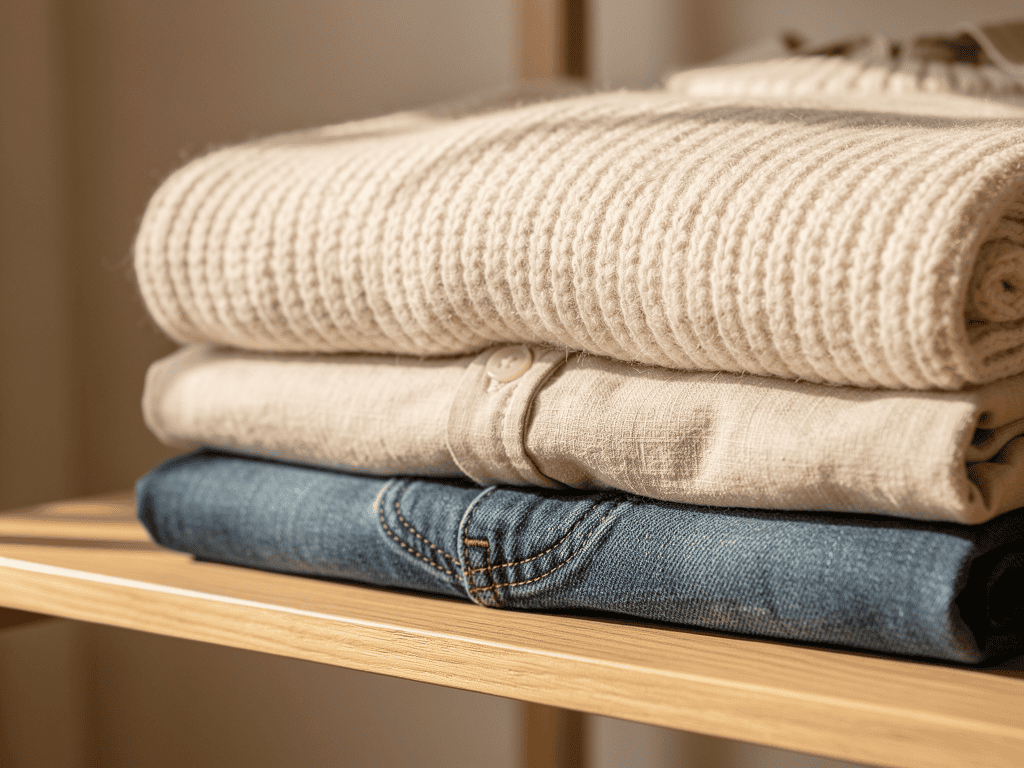
Verified: the “4 bottoms x 5 tops x 2 layers” formula yields 40+ combinations. A standard capsule is 20–30 pieces per season. It’s not minimalist magic — it’s simple combination math.

Frequently asked questions
How many pieces should a capsule wardrobe have?
20–30 per season, usually around 25. A base capsule is 15–20 pieces. Anything beyond that is no longer a capsule, it’s a warehouse. Start with 25 and adjust from there based on your life.
Is a capsule wardrobe expensive?
No. You start with what’s already hanging in your closet and buy 3–5 missing pieces. What’s expensive is buying a new blouse every time you “have nothing to wear.”
What do I do with pieces I feel bad throwing away?
The 12-month rule: haven’t worn it in a year — into the balcony box. Didn’t reach for it during the season — donate it. The guilt fades faster than you’d think.
What colors should I use for my base?
Two neutrals that suit you (beige, gray, black, navy) plus one or two accents. The key is that all your tops go with all your bottoms.
How many outfits does a 15-piece capsule give?
From 40 to 60. It all comes down to multiplication: more matching pieces means more outfits. One extra blouse that goes with all your bottoms instantly adds 4–5 looks.
Are winter and summer capsules two different things?
Yes. It’s easier to keep an in-between-season base (jeans, shirts, a blazer) and swap out layers: tank tops and shorts in summer, sweaters and coats in winter.
Does a capsule work if I love bold colors?
Yes. A capsule isn’t about boring beige — it’s about compatibility. Bold pieces work as long as they match your neutral bottoms.
Now a question for you: how many pieces in your closet still have tags on them, waiting for a “special occasion”? Tell the truth in the comments — let’s gather some statistics on pointless shopping.