Wool and cashmere: how to wash so your sweater doesn’t shrink two sizes
Wool and cashmere should be washed at 30 °C with liquid detergent, without spinning above 600 rpm, and never dried on hangers. Anything above 40 °C plus friction triggers irreversible shrinkage: the fiber compacts, and the original size cannot be restored. A 6,000 ₽ sweater loses its shape in a single “Cotton 60” wash cycle.
In short:
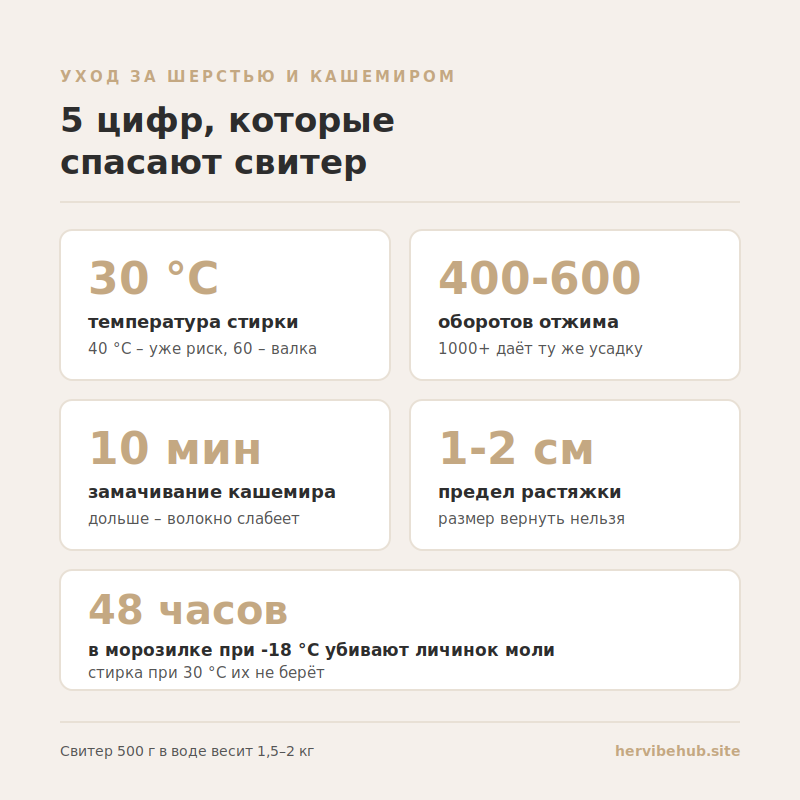
– 30 °C, liquid detergent, “Wool” cycle, spin at 400–600 rpm
– Never hang a wet garment: a 500 g sweater soaked in water weighs 1.5–2 kg
– A shrunken garment can be stretched by 1–2 cm at most, not a full size
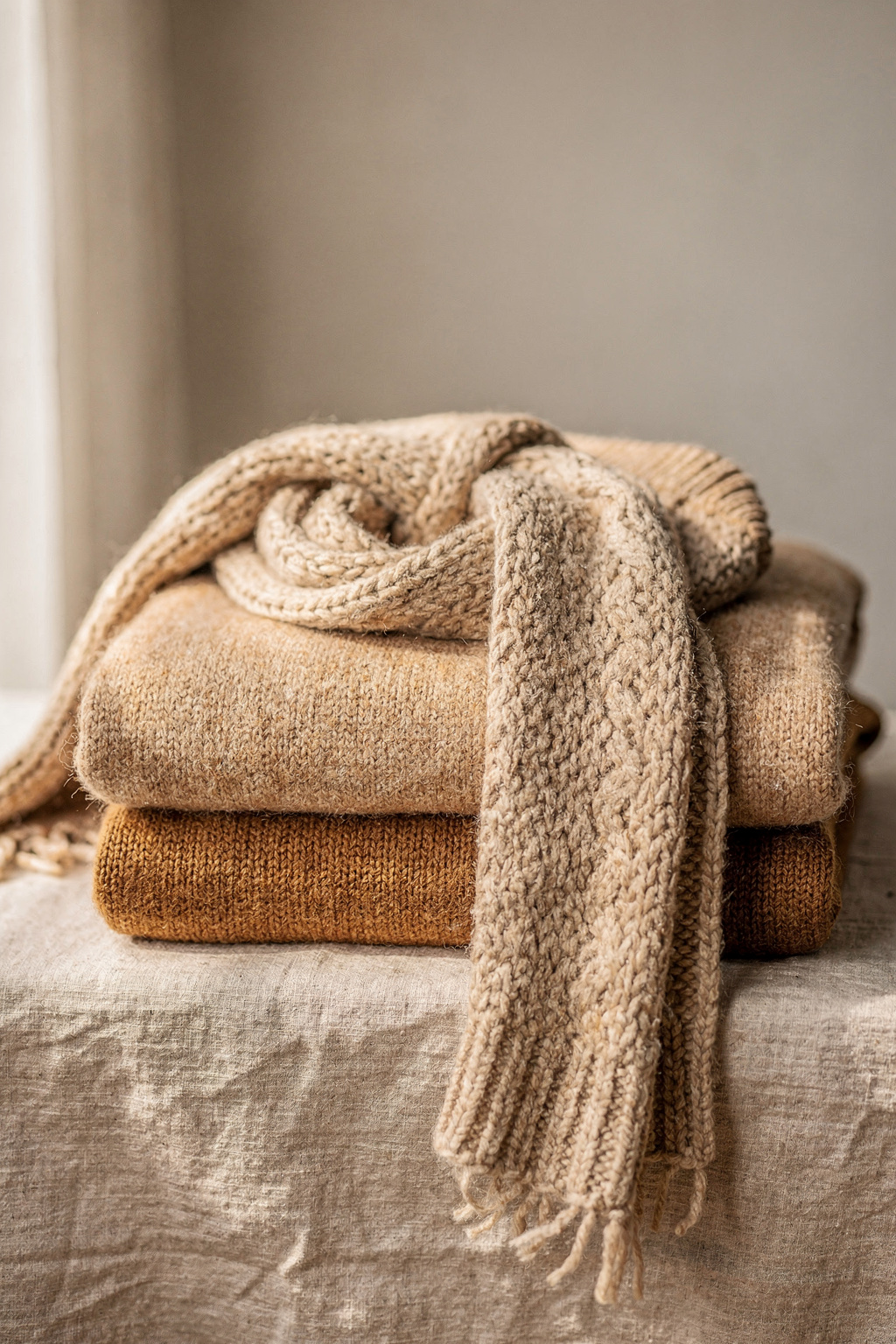
Why wool shrinks after washing
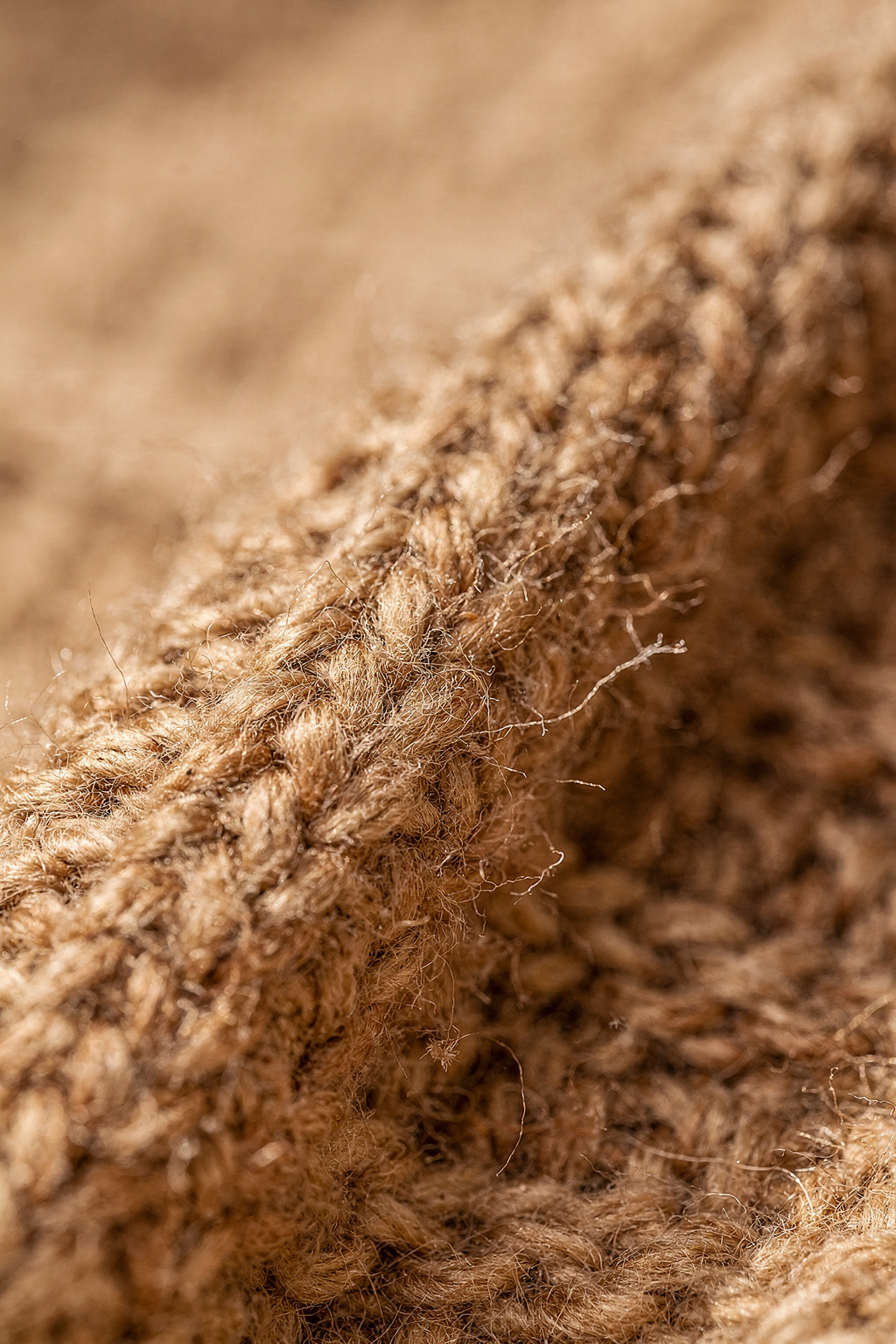
Wool fiber is covered with scales, like roof tiles. When dry, they lie flat. In hot water, the scales lift up, and with friction they catch onto each other and lock in place. The fiber shortens, and the fabric shrinks.
The process is called felting and is irreversible, like boiling an egg. The second enemy is alkali: wool is made of keratin, the same protein as hair, and regular powder contains alkali and protease enzymes. Protease breaks down protein, the fiber thins out, and the garment becomes covered in pills.
Do this: use a liquid detergent labeled “for wool and silk” with a neutral pH.
Don’t do this: don’t pour universal powder “by eye.” It’s designed for cotton, not for protein.
What temperature and detergent are safe for wool?
The safe range is 30 °C, with 40 °C as the absolute maximum. Ten degrees makes all the difference: at 30 °C the scales stay pressed down, at 40 °C they lift, and at 60 °C the process runs like an avalanche.
- 30 °C – wool, cashmere, merino, alpaca.
- 40 °C – the limit for dense knits with synthetic blends, not for pure cashmere.
- 60 °C and above – shrinkage of 2–3 sizes in one cycle. Cannot be restored.
The spin cycle matters just as much: a centrifuge at 1000–1200 rpm is the same friction, only twenty times stronger. Set it to 400–600.
Do this: set 30 °C and 400 rpm, or better yet, turn off the spin completely.
Don’t do this: don’t wash wool together with jeans and towels. Heavy wet items press down on it in the drum.
How to read the label: symbol chart according to GOST
The care label doesn’t use words — it uses symbols. Their meanings are defined in GOST ISO 3758-2014: washing, bleaching, drying, ironing, dry cleaning.
| Symbol | What it means | What to do |
|---|---|---|
| Wash tub with the number 30 | Wash at 30 °C | “Wool” cycle, liquid detergent |
| Wash tub with a hand | Hand wash only | No more than 10 minutes in water, no friction |
| Wash tub crossed out | Washing prohibited | Dry cleaning only |
| Square with a horizontal line | Dry flat | On a towel, horizontally, smoothed out |
| Iron with one dot | Iron up to 110 °C | Through a damp cloth |
| Circle with the letter P | Dry clean with perchloroethylene | Regular dry cleaning |
If the label has been cut off, assume the worst case: hand wash at 30 °C.
Do this: take a photo of the label when you buy the item. You won’t find it a year later.
Don’t do this: don’t rely on the “50% wool” composition. The percentage doesn’t tell you how to wash it — the symbol does.
How to wash wool in the machine: 7 steps without shrinkage
- Turn it inside out. Friction will hit the inside, and the outside won’t pill.
- Put it in a mesh laundry bag. It limits stretching and protects against snags.
- Fill the drum halfway. A full drum = heavy friction = felting.
- Pour in liquid detergent. Half the dose from the package: there should be little foam.
- Select the “Wool” or “Hand Wash” program. These use gentle drum rocking instead of spinning.
- Set 30 °C and 400–600 rpm. If the program can’t be adjusted, turn off the spin entirely.
- Take it out right after the signal. Two hours in a wet drum — and the shape is gone.
Tumble drying is the same 60 °C plus rotation for an hour. Even the delicate setting compresses the fiber.
Do this: keep a separate bag just for wool so you don’t have to search every time.
Don’t do this: don’t use the “quick wash 15 minutes.” A short cycle runs at high speeds.
How to hand wash cashmere?
Cashmere is two to three times thinner than sheep’s wool and fears any mechanical action. Wash it in a basin, not under a running tap.
- Fill with 5–7 liters of water at 30 °C. Test with your elbow: slightly warmer than skin.
- Dissolve a capful of wool detergent. Swish with your hand until light foam forms.
- Submerge the garment for 10 minutes. Don’t rub, don’t squeeze. The water will do the work itself.
- Rinse in water of the same temperature. A sudden switch to cold — and the garment shrinks.
- Squeeze out through a towel. Roll it up and press with your hands. Never wring.
A sweater weighing 500 g after soaking weighs 1.5–2 kg. If you lift it wet by the shoulders, the shoulders will stretch into “bubbles” that can’t be smoothed back.
Do this: support the wet garment with both hands from below, like a tray.
Don’t do this: don’t pour in fabric softener “for softness.” Silicones coat the fiber, and the volume disappears.
How to dry wool so it doesn’t stretch out
Wet wool loses about 20% of its strength and holds its shape worse than it feels to the touch. There’s only one rule: always dry flat.
- On a towel. Lay it out, shape it, leave at room temperature.
- Away from the radiator. Direct heat dries unevenly: edges shrink while the middle stays damp.
- Out of drafts. Airflow pulls the fiber in one direction, and the garment warps.
- Change the towel every 3–4 hours. One towel absorbs about 500 ml and then stops working.
You can hang a garment only when it’s completely dry, and only on wide hangers. Thin wire leaves permanent bumps.
Do this: dry it in the shape you want to wear it.
Don’t do this: don’t dry on the radiator “to make it faster.” Faster means two sizes smaller.
What to do if the sweater has already shrunk?
If the garment shrank by one size, you can realistically stretch it by 1–2 cm in width. If by two — the fiber has felted, and that’s a new size, not a washing defect.
- Soak in 30 °C water with a capful of hair conditioner for 20 minutes. Silicones relax the fiber.
- Don’t rinse. Squeeze out through a towel, leaving some of the product in the fiber.
- Stretch by hand from the center to the edges. Slowly and evenly, not from one point.
- Pin in place and leave to dry. Once it dries stretched — it stays that way.
Sleeves and the neckline can’t be saved this way. Dry cleaning costs from 1,500 ₽ for a wool sweater and from 1,900 ₽ for a cashmere one, with no guarantee of results.
Do this: first measure how much it shrank. Stretching 1–2 cm is realistic; restoring a full size is not.
Don’t do this: don’t pull a dry garment. Dry fiber doesn’t stretch — it tears.
How to remove pills and protect wool from moths
Pills are short fibers that have pulled out of the yarn and rolled up from friction. They appear not from poor quality but from wear. Remove them with a fabric shaver with a mesh blade: it cuts the ball above the fabric. A razor and scissors cut at the root, leaving bald spots.
It’s not the moth that eats — it’s the larva: it feeds on keratin, meaning the wool itself. Washing at 30 °C doesn’t kill larvae. Two things work: the freezer (a bag at –18 °C for 48 hours) and a sealed container with silica gel. A vacuum bag sucks out the air along with the volume; the fiber gets crushed and loses its fluff. Cedar balls smell nice but don’t kill larvae.
Do this: stack wool in a container rather than hanging it in the closet for the season.
Don’t do this: don’t store wool on hangers from spring to fall. In 6 months, the shoulders stretch by 1–2 cm.
How much a mistake costs: counting in rubles
A merino sweater 6,000 ₽ + a wash at 60 °C = minus 2 sizes
Restoration: 0 ₽, zero result

The same sweater + "Wool" cycle at 30 °C, spin 400 rpm = 0 ₽, garment intact
Dry cleaning after a failed wash: 1,500–1,900 ₽, no result

Saving on a mesh bag (200 ₽) = risk of losing a 6,000 ₽ sweater
A bag, detergent, and the right cycle cost about 800 ₽ a year. A ruined cashmere jumper costs from 8,000 ₽.
Verified: temperatures and cycles have been cross-checked with labeling under GOST ISO 3758-2014 and recommendations from wool knitwear manufacturers. Dry cleaning prices are based on public price lists of Moscow chains, October 2026. Author: HerVibeHub editorial team.
Frequently asked questions
Can you wash wool in a washing machine?
Yes, at 30 °C on the “Wool” cycle with a spin no higher than 600 rpm, in a mesh bag, and with liquid detergent instead of powder.
Why did my sweater shrink after washing in cold water?
The cause isn’t the temperature — it’s the mechanics: a 1000 rpm spin creates the same friction as hot water. Check what spin speed was set by default.
What should I wash cashmere with if I don’t have a special detergent?
Use sulfate-free baby shampoo. It has a neutral pH and contains no proteases that break down protein fiber.
How often can you wash a wool sweater?
Once every 5–7 wears. Wool repels dirt and doesn’t hold odors the way cotton does.
Can you iron cashmere?
Only through a damp cloth at 110 °C, or with a steamer held 2–3 cm away without touching. Direct contact with the soleplate leaves a shine that can’t be removed.
Does soaking in hair conditioner help restore the size?
Partially: it returns 1–2 cm in width if the garment shrank by one size. With two-size shrinkage, the fiber has felted, and stretching won’t work.
How do you wash wool — on the “Wool” cycle or still on “Quick 30”? And what do you do with a shrunken garment afterward: stretch it or take it straight to the dry cleaner? Tell us in the comments — let’s collect real-life fail stats.
Read next: capsule wardrobe: how many clothes you actually need and a blazer in fall: old money looks.