You’re 32. You look in the mirror and see: crow’s feet, the nasolabial fold has become more noticeable, your skin feels tight after a shower like you washed your face with dish soap. You head to the beauty store and drop 15 grand on an “anti-aging complex with peptides and stem cells from a Swiss apple tree.” A month goes by. Two. Nothing’s changed. Sound familiar? Let’s turn off the marketing and switch on biochemistry. In 10 minutes we’ll put together a routine that actually works — no selling a kidney required.
In short:
– Out of the entire beauty industry, exactly three molecules actually work: retinol, vitamin C, SPF 50
– An 8,000-ruble cream and a 500-ruble drugstore jar often have the same formula
– A basic monthly routine costs 2,650 rubles, not 15,000
Audio version of the article: great for the road, while cooking, or on a walk.
{“@context”:”https://schema.org”,”@type”:”AudioObject”,”name”:”Skincare after 30: what actually works and what’s money down the drain”,”description”:”Audio version of the article.”,”contentUrl”:”https://hervibehub.site/wp-content/uploads/2026/10/podcast-uhod-za-kozhej-posle-30.mp3″,”encodingFormat”:”audio/mpeg”,”duration”:”PT9M43S”}
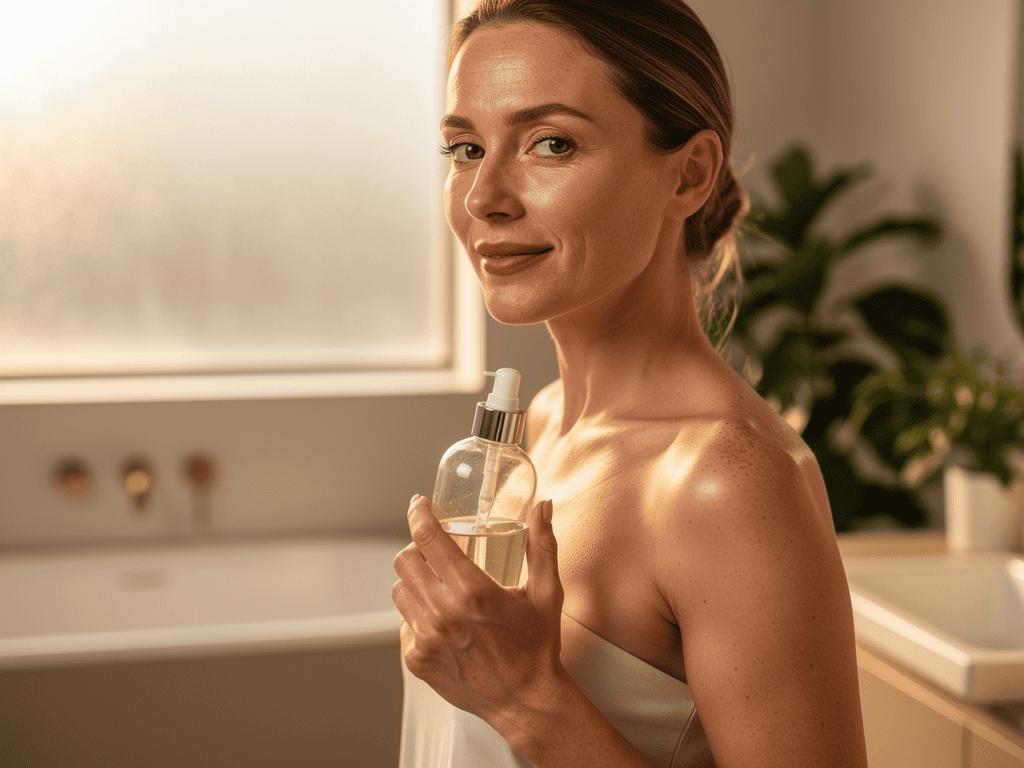
Why a 5,000-ruble cream does nothing and a 400-ruble jar gets results
Beauty industry marketing is built on one simple trick: they sell you fear. Fear of aging, fear of “letting yourself go,” fear that your neighbor looks better. So you buy. A jar with gold particles for 8,000. A serum with orchid extract from Bali for 12,000. And you wait for a miracle.
But the miracle never comes. Because your skin is an organ, not a display case. And it works by the laws of biology, not marketing. Let’s break down what actually matters and what’s just pretty packaging.
Price ≠ effectiveness
Compare the three pillars of skincare and their real cost:
| What works | Drugstore price | Luxury price | Difference |
|---|---|---|---|
| Retinol 0.5% | 400–800 ₽ | 5,000–12,000 ₽ | 10–15x |
| Vitamin C 10–20% | 350–700 ₽ | 4,000–9,000 ₽ | 10–12x |
| SPF 50 | 500–900 ₽ | 3,000–7,000 ₽ | 5–7x |
The difference is in the fragrance, the packaging, and the rent for a boutique in the fancy district. Not in the formula. The same retinol from the same lab. In a 500-ruble drugstore jar and in an 8,000-ruble luxury one.
Do this: Buy drugstore skincare with proven effectiveness. Brands like The Ordinary, Cerave, La Roche-Posay, Bioderma, Russian brands Aravia and Librederm — they work. Check ingredients through CosDNA.
Three ingredients that actually change your skin after 30
Everything that works against aging fits into three molecules. The rest is water, silicones, and wishful thinking.
1. Retinol (vitamin A)
The only ingredient with a proven anti-aging effect. It makes skin cells renew faster. Smooths fine lines, evens out tone, tightens pores. Start with a 0.25–0.5% concentration, apply ONLY at night. The first 2–3 weeks may bring peeling — that’s your skin adjusting, don’t quit.
2. Vitamin C (ascorbic acid)
An antioxidant. It neutralizes free radicals — those particles that destroy collagen from sun, exhaust fumes, and stress. Apply in the morning UNDER your SPF. Concentration 10–20%. If the product turns brown or smells burnt — it’s oxidized, toss it.
3. SPF 50 (every day, including November)
90% of skin aging comes from the sun. Not from age, not from genetics, not from “bad ecology.” UV destroys collagen even through an office window and on a cloudy day. Without SPF, retinol and vitamin C are money down the drain. You’re destroying by day what you’re repairing by night.
Don’t do this: Don’t buy “all-in-one” products — a cream that moisturizes, fights wrinkles, has SPF, and tint. That doesn’t exist. Retinol doesn’t play well with acids, vitamin C oxidizes in a jar with an open top. Keep them separate.
How to build a 5-minute morning and evening routine
A minimal, working system. No “10-step Korean skincare,” no patches, mists, or gold masks. Only what’s proven.
- Morning (3 minutes). Rinse with water, no cleanser — your skin didn’t get dirty overnight. Apply vitamin C to dry skin. Wait 60 seconds for it to absorb. Apply SPF 50 — a two-finger-length amount, no less. Done.
- Evening (2 minutes). Remove SPF with cleansing oil or micellar water. Wash with a gentle cleanser. Apply a moisturizer with ceramides. Wait 20 minutes — your skin should be completely dry. Apply retinol, avoiding the eye area. Done.
- Frequency. Retinol — 3 times a week for the first 2 months, then you can go every night. Vitamin C — every morning. SPF — every day, even if you’re home by a window.
- Neck and hands. Whatever you put on your face — put on your neck and the backs of your hands. These are the zones that instantly give away your age. Smooth face, turtle neck — a classic.
- Reassess after 3 months. If there’s no result after 3 months (fewer wrinkles, more even tone, firmer skin) — switch products. Skin renews every 28 days; after 3 cycles, the result is either there or it isn’t.
Monthly budget for a working routine (drugstore):
- Vitamin C 20% serum: 500 ₽
- Moisturizer with ceramides: 450 ₽
- SPF 50 for face: 700 ₽
- Retinol 0.5%: 600 ₽
- Cleansing oil: 400 ₽
Total: ~2,650 ₽/month

For comparison — a single luxury cream: 8,000–15,000 ₽
Checklist: what to throw out of your beauty bag right now
Products that don’t work — but take up space and eat your budget. Let’s go through them without mercy.
- Toner. Not needed if you have a pH-balanced cleanser. Tap water doesn’t shift your skin’s pH enough to require a toner. Exception — an acid toner with AHA/BHA 1–2 times a week for exfoliation.
- Eye cream. A standalone product that’s a dud. A regular moisturizer does the same thing. If an eye cream doesn’t contain retinol or peptides in working concentrations — it’s just cream in a small jar at triple the price.
- Face oils. They clog pores. Ceramides and squalane in a cream work better and safer. Coconut oil on your face is a crime against skin.
- Mists and thermal water. Water in a spray can for 1,500 rubles. It moisturizes for exactly the 30 seconds before it evaporates — and then dries your skin out even more.
- Sheet masks. Single-use plastic soaked in serum. The effect lasts one evening. If you want a “ritual” — buy a good serum and use it every day. You’ll get results, and no trash.
- Scrubs with apricot pits. Micro-tears in your skin. Replace with an acid peel once a week — works deeper and safer.
Verified: Recommendations are based on PubMed data and clinical studies of retinoids (Kligman, 1984; Mukherjee, 2006), stable forms of vitamin C (Pinnell, 2001), and SPF 50 photoprotection (Journal of Investigative Dermatology, 2013). The author follows the principles of evidence-based cosmetology — no homeopathy or “natural organic” nonsense.

Frequently asked questions
Can you use retinol in summer?
Yes. The myth that retinol increases daytime photosensitivity — it works at night. During the day — SPF 50 regardless, with or without retinol. The sun ages your skin on its own; retinol has nothing to do with it.
At what age should you start anti-aging skincare?
SPF — from birth. Vitamin C — from 20–22 as prevention. Retinol — from 27–30, when natural cell turnover slows down. Earlier — no point, your skin handles it on its own.
What to do about pigmentation after 30?
The #1 cause is sun without SPF in your 20s. What’s showing up now is the result of tanning 5–10 years ago. SPF 50 + vitamin C in the morning + retinol at night. If it doesn’t fade in 4 months — see a dermatologist for azelaic acid or laser.
Does collagen in creams work?
No. The collagen molecule is too large to penetrate the skin barrier. Collagen in a cream is a moisturizer, nothing more. Want collagen — eat protein, sleep 7–8 hours, and don’t smoke. And retinol.
Hyaluronic acid — must-have or scam?
It works, but not the way they promise. It moisturizes the top layer for a few hours. It doesn’t remove wrinkles — it just temporarily “plumps” them with moisture. For photos — fine. For real anti-aging results — retinol, vitamin C, SPF. Hyaluronic acid is a nice bonus, not the foundation.
What about under-eye patches?
Silicone ones — they just prevent moisture from evaporating while they’re on. Take them off — 20 minutes later everything’s back. Hydrogel ones with caffeine — slightly reduce puffiness for an hour. Zero real cumulative effect. If you enjoy the process and have an extra 300 rubles a day — fine. But it’s not skincare, it’s a spa ritual.
What actually works for wrinkles besides retinol?
Peptides (Matrixyl, Argireline) — weaker than retinol but without irritation. Niacinamide — evens tone, tightens pores. AHA/BHA acids once a week — exfoliate dead cells. And botulinum toxin at a cosmetologist — if wrinkles are already deep, no cream will erase them.
📌 Save to Pinterest
Save this checklist to your “Beauty & Skincare” board — so you don’t lose it and can come back when you’re about to run to the beauty store for another jar “with peptides and stem cells.”

What do you save on in your skincare routine — and what do you never skimp on? Share in the comments 👇
📌 Save to Pinterest
Save this checklist to your “Beauty & Skincare” board — so you don’t lose it and can come back when you’re about to run to the beauty store for another jar “with peptides and stem cells.”
What do you save on in your skincare routine — and what do you never skimp on? Share in the comments 👇