Your Photos Were Stolen for a Fake Profile: How It Works and What to Do
A seaside selfie, a photo from a work party, a shot from vacation — and suddenly it’s living its own life in someone else’s dating site profile. Someone is pretending to be you, building relationships, asking for money, and you’re the one left cleaning up the mess. Let’s break down how photos get stolen, where they end up, and how to spot a fake before it does real damage.
In short:
– Photos are stolen from social media, messengers, and even private chats
– Stolen images end up in fake profiles: scams, romance fraud, extortion
– 5 out of 10 dating site profiles contain false information
– You can check a photo across 27 dating sites in just a couple of minutes for 30 rubles
– Finding your photo in someone else’s profile is a reason to sound the alarm, not shrug it off
The Scale of the Problem in Numbers
Photo theft for fake profiles isn’t a rare accident — it’s a well-oiled business. Here are the numbers that explain why checking your photos regularly is worth it:
- 5 out of 10 profiles on dating sites contain false information — experts estimate that every other profile is fake.
- 63% of fraudulent charges in online dating come from the FakeDate scheme — a fake date where a scammer hides behind a profile.
- 22,986 rubles is the average amount taken from a victim in a FakeDate scheme in Russia.
- $1.3 billion lost by Americans to romance scams over five years — and that’s just the reported cases.
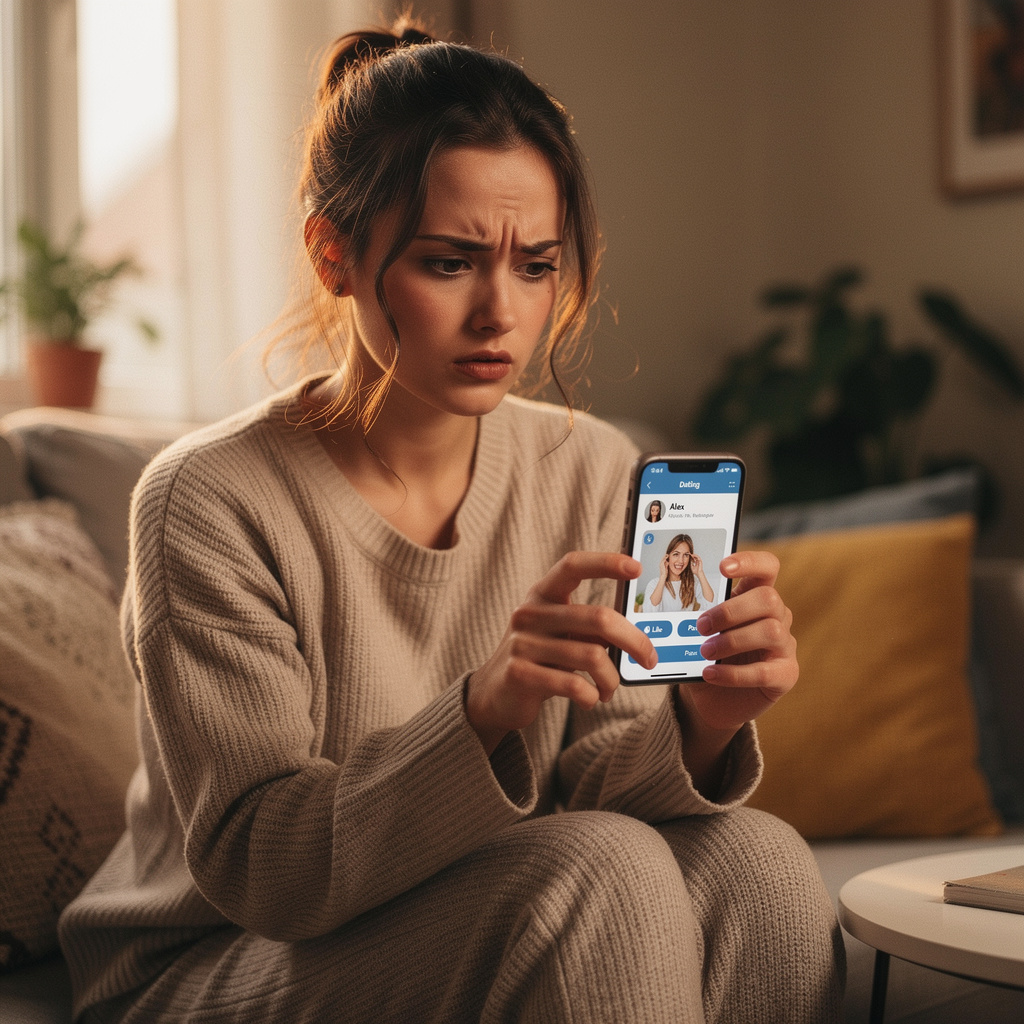
Behind every one of those numbers is someone’s stolen photo. An ordinary girl’s or guy’s picture becomes the face of a scammer, and the victim falls in love not with a person, but with your photograph.
Who Steals Photos and Why
The logic is simple: a scammer needs a real, trusting person, not a model. So they take someone else’s photos — ordinary, candid, unfiltered. That kind of image builds trust, not suspicion.
Typical theft scenarios:
- Romance scam. A fake profile makes the victim fall in love, chats for months, and then disaster strikes: an illness, a plane ticket, a debt. Then comes the request to send money.
- Extortion scam. The victim receives their own intimate photos or chat logs and is told to pay up or be exposed.
- Building trust. A scammer infiltrates someone else’s social circle using your face, then asks acquaintances to borrow money.
- Selling photo packs. Stolen photos get bundled and sold on Telegram channels and shadow marketplaces, where they’re resold for new fakes.
The worst part: the victim is usually the last to know — when a stranger messages them with a screenshot of someone else’s profile, or when friends ask why you were asking for money.
Where Photos Come From
Most often — from open sources you posted yourself and forgot about:
- social media profiles with public albums;
- messenger and app avatars;
- photos from dating sites — those get stolen especially eagerly;
- stories and posts that disappeared from your feed after a week but ended up in someone’s gallery.
A separate story — leaks from private chats and conversations. In those cases, photos don’t get out because of your choices, but because of someone else’s carelessness or malice. That’s hard to control, but checking whether a photo has surfaced in someone else’s profile is absolutely doable.
How to Tell If Your Photos Are Already in Someone Else’s Profile
There are three direct signals:
- Friends ask about you from a different account. Someone is messaging them under your name or with your photo — that’s the most obvious red flag.
- Screenshots of your photos show up in a different context. For example, a friend sends you a profile of a cute girl, and the photo is you.
- Strangers start messaging you with “you didn’t reply yesterday.” Even though you didn’t even open the dating site yesterday.
The problem is that waiting for these signals means giving the fake time to do its work. And it works fast: scam schemes live for days, not months. So it’s better to check proactively.

How Reverse Photo Search Works
The mechanics are the same as reverse image search, but tuned specifically for dating sites. The service takes your photo, runs it through a database of profiles, and shows whether it appears in someone else’s profile — in full or cropped.
And that’s where FotoSyshik comes in. It’s a person search by photo across 27 dating sites: Mamba, Beboo, LovePlanet, DrugVokrug, Tinder, Twinby, and others. The database holds over 23 million profiles and nearly 300 cities. You upload a photo, the service searches for matches, and shows where it has surfaced.
A check costs 30 rubles per search, and the first three searches are completely free. Access is through Telegram, which is convenient: no need to register on yet another site or hand over your email.
How to Check Your Photo Step by Step
- Pick a clear photo. A portrait without filters works best — those are the ones scammers most often steal and put into profiles.
- Upload it to the service. Use the link below — it’s a partner link, and the first searches are free.
- Review the matches. The service will show which sites feature this photo and in whose profiles.
- If it’s found — act. Take a screenshot, file a complaint with the site’s administration, and ask them to remove the profile.
- Warn your loved ones. If the fake is already messaging people under your name — tell them in advance, before anyone sends money.
Important: you can check not only your own photos but also the photos of someone you’ve met. If their profile pops up under different names or their photos show up in a dozen other profiles — you’re most likely dealing with a fake. It works both ways.
What to Do If Your Photo Really Was Stolen
- Don’t panic and don’t delete the photo from all your social media. Screenshots have already been taken; deleting won’t fix anything but will erase the trail.
- Gather evidence. The link to the fake profile, screenshots of conversations, dates.
- Report it to the site’s support team. Major services have a complaint form for fake profiles — state that your photo is being used.
- Report it to the police. If the fake is already extorting money or making threats — that’s grounds for a formal report, not negotiation.
- Check other sites. A fake is rarely alone — usually a photo circulates across several platforms at once.
How to Protect Your Photos in Advance
- Make your profiles private. Setting your social media to private cuts off half of the theft sources at the root.
- Don’t post anything you’d be embarrassed to see in someone else’s profile. Intimate photos and personal shots shouldn’t be sent to anyone, not even in secret.
- Add watermarks. A signature or username on a photo makes it harder to reuse.
- Check your main photos every couple of months. A couple of minutes of searching — and you’ll know where your face is circulating.
The most frustrating part of this whole situation is that a stranger using your photo keeps living their life while you’re left sorting it out. That’s why proactive checking works better than any after-the-fact investigation.

Frequently Asked Questions
Where do scammers get photos?
Mostly from public social media, messengers, and dating sites. Sometimes from leaked chats and private conversations.
Is it legal to search for a person by photo?
Yes, if you’re checking your own photos or the profile of someone you’ve met yourself. It’s personal safety and scam protection, not surveillance.
How much does a check cost?
30 rubles per search, with the first three searches free. Access is through Telegram, no registration needed.
What should I do if my photo is found in someone else’s profile?
Save the link and screenshots, file a complaint with the site’s support team, and if necessary, report it to the police. And check other platforms too.
Can I check someone else before meeting them?
Yes. Upload their photo — the service shows where else it appears. If the photo shows up in other people’s profiles under different names, it’s a fake.
Have you checked where your photos are circulating? Upload a photo and take a look — maybe your face is already working for someone else. Check a photo or use the bot @foto_sishik_bot.