Four Phases That Don’t Ask for Permission
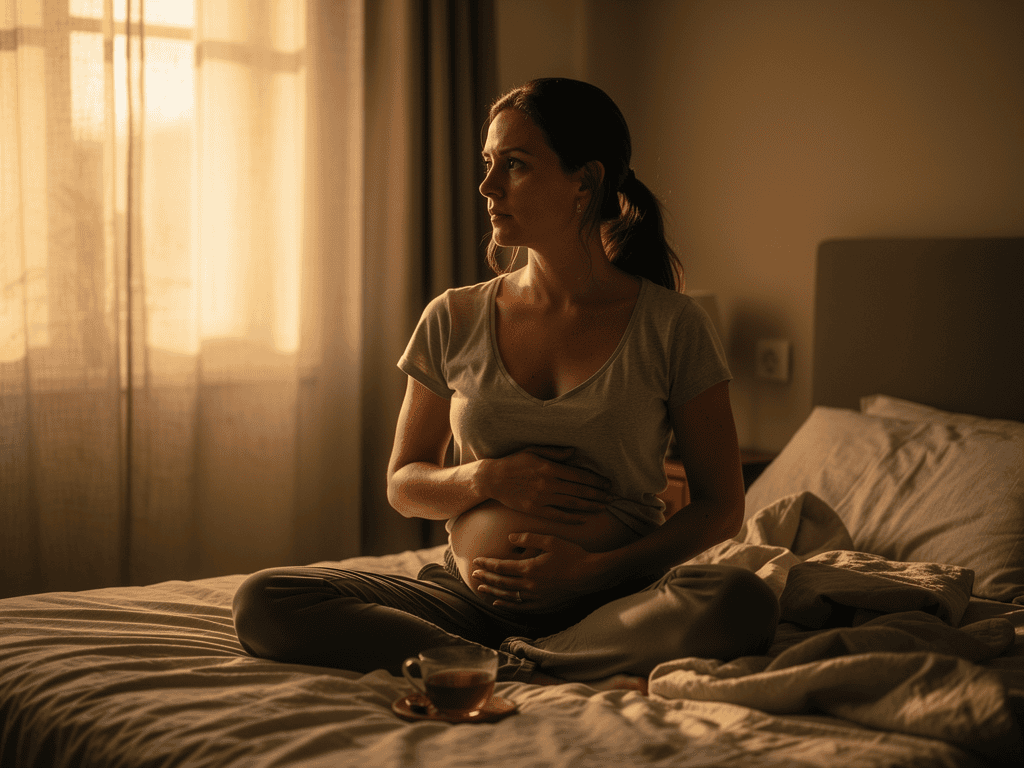
You cry over a cat food commercial on Tuesday, and by Friday you’re ready to quit your job, get divorced, and move to another country. Three days later — you’re fine again. Sound familiar?
This isn’t “weakness,” it’s not “hysteria,” and it’s not a reason for PMS jokes. It’s hormones — estrogen and progesterone — doing things to your brain that nobody bothered to tell you about in school. And then you spend years wondering: “What’s wrong with me?”
Nothing. It’s just that nobody explained the rules of the game. Let’s fix that.
In short:
– Your cycle isn’t just “those days.” Your hormones swing for 28 days straight, and each phase changes your mood, energy, and decision-making
– You can plan your life around your cycle instead of fighting it. Important meetings — one week, the gym — another
– If “just PMS” takes you out of life for a whole week — that’s not normal. See a doctor.
Audio version of the article: perfect for the road, while cooking, or on a walk.
{“@context”:”https://schema.org”,”@type”:”AudioObject”,”name”:”Cycle and mood: how hormones run your life and what to do about it”,”description”:”Audio version of the article.”,”contentUrl”:”https://hervibehub.site/wp-content/uploads/2026/10/podcast-tsikl-i-nastroenie-gormony.mp3″,”encodingFormat”:”audio/mpeg”,”duration”:”PT10M19S”}
Why “it’s just PMS” is a lie that suits everyone
The phrase “she’s just PMSing” shuts down any conversation about women’s health in two seconds. It’s convenient — for you and for everyone around you. You get a free pass for bad moods. Everyone else gets permission not to take you seriously.
In reality, over the four weeks of your cycle, estrogen and progesterone ride through your brain like a roller coaster. Without knowing the schedule, you’re a passenger without a seatbelt.
Estrogen works in the brain like a top executive: it boosts serotonin (mood), dopamine (motivation), and information processing speed. At its peak, you think faster and feel more confident.
Progesterone is its antagonist: it calms the nervous system, but it also slows you down, fogs your head, and switches on “stay under the blanket” mode. It rises in the second half of the cycle, and if you don’t know it’s him, you think you’re just “lazy.”
Do this: track your state in a calendar for three cycles in a row. Don’t write “mood: bad” — be specific: “cried for no reason,” “want to quit my job,” “sex is the best idea ever.” After three months, you’ll see the pattern — and stop blaming your personality.
Don’t do this: don’t blame EVERYTHING on hormones. If you’re depressed all month long, hormones have nothing to do with it — you need a psychiatrist.
The four phases of the cycle: what’s happening in your head each week
The cycle is counted from the first day of your period. Then come four phases with different chemistry and mood.
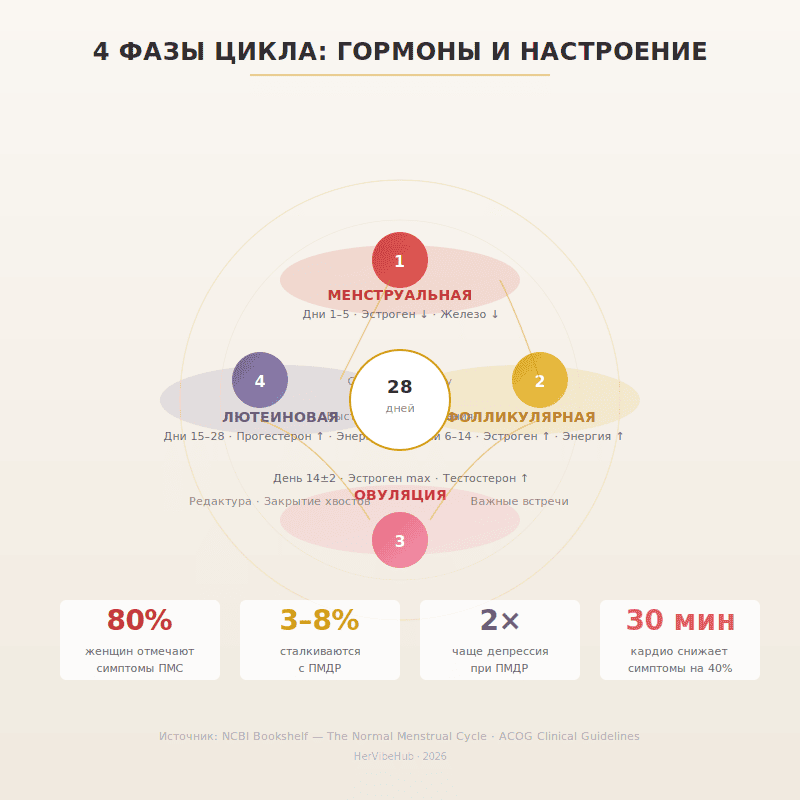
- Menstrual phase (days 1–5). Estrogen and progesterone are at rock bottom. Energy is at zero, you want to sleep and for everyone to leave you alone. It’s physiology: iron drops with blood loss, your brain runs on low fuel. What to do: lighten your load, eat red meat or take an iron supplement, don’t schedule important meetings.
- Follicular phase (days 6–14). Estrogen is rising. You wake up feeling “I can do anything.” Skin is clearer, your voice is higher (yes, that’s a scientific fact), libido is up. Best time for: interviews, presentations, first dates, tough negotiations. Your brain is at peak performance — use it.
- Ovulation (day 14±2). Estrogen is at maximum, and testosterone spikes too. You feel sexually confident, sociable, “in the flow.” Research shows that on these days women subconsciously choose brighter clothes and rate their appearance higher. Great time for: public speaking, filming, dates, and projects that require charisma.
- Luteal phase (days 15–28). Progesterone rises, estrogen drops. This is that “PMS week” everyone talks about. Mood swings, energy drops, you crave carbs. The brain switches to “cleanup mode” — you notice details and mistakes better. Best time for: editing, budget reviews, decluttering, wrapping up unfinished tasks. Don’t schedule important negotiations this week — you’ll be too critical.
Important: Phase lengths are individual. Some people have a 26-day cycle, others 32. Track YOUR pattern instead of relying on the “average temperature in the hospital.”
Do this: download a tracking app (Flo, Clue, or Google Calendar) and mark your phases for three months. Not just period days — but phases: when you have energy, when you crash, when you feel aggressive.
Don’t do this: don’t expect a perfect pattern from month one. Stress, lack of sleep, travel — everything has an impact. Look at the trend, not individual days.
How to plan your life around your cycle, not against it
The biggest mistake is trying to be equally productive for all 28 days. You’re not a robot — you’re a complex biochemical system with different modes. When you know the schedule, you stop wasting energy fighting yourself.
A weekly work plan:
- Week 1 (period): reduced workload. Administrative tasks, routine. Exercise — yoga, stretching, walking.
- Week 2 (follicular): acceleration. Important meetings, new projects, interviews. Exercise — strength training, intervals.
- Week 3 (ovulation): peak communication. Dates, presentations, networking. Testosterone helps you feel confident.
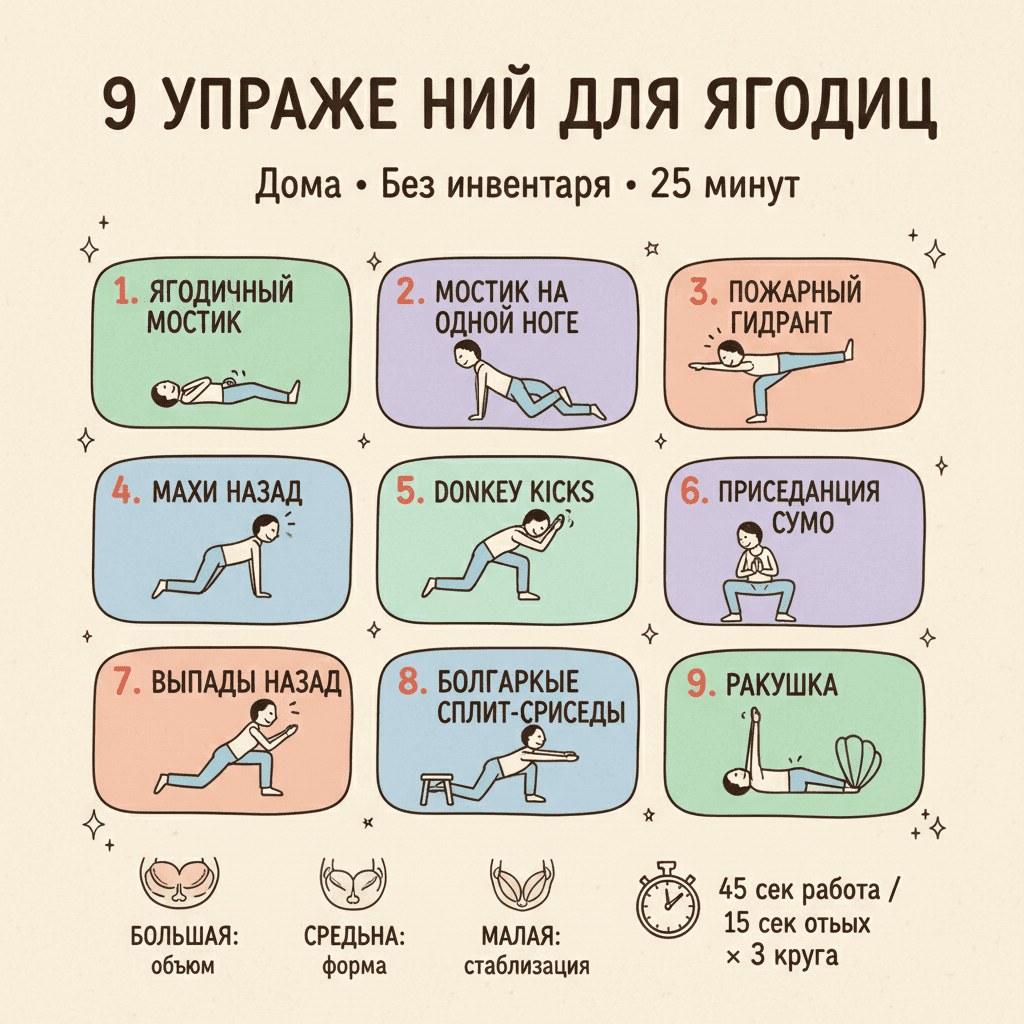
- Week 4 (PMS): wrapping things up. Editing, finances, cleaning. Exercise — swimming, pilates. Don’t start anything new.
This isn’t about “limitations.” It’s strategy. You’re directing energy where it will produce the most results.
Do this: print out a monthly calendar, mark the phases, and plan key events. A project with a deadline — second week. Budget — fourth week.
Don’t do this: don’t feel ashamed of an “unproductive” week. Recovery is part of the cycle, not a bug. Lions sleep 20 hours a day, and nobody calls them lazy.

Checklist: 5 things to start tracking this cycle
- Start a tracker. Paper or an app — doesn’t matter. Mark your period days and rate your energy from 1 to 10 every evening. After two months, you’ll see the wave.
- Record moods specifically, not “good/bad.” “Cried over a reel,” “ready to get divorced,” “feeling sexy.” The brain remembers vivid details — use that.
- Track your basal body temperature. Thermometer by the bed, every morning before getting up. A jump of 0.3–0.5°C = ovulation. After three months, you’ll know your chart down to the day.
- Track your skin cycle. If you always break out in the same spot a week before your period — that’s hormonal. Write it down — your dermatologist will thank you.
- Check your iron and vitamin D. Heavy periods silently deplete ferritin for years. Symptoms: fatigue, hair loss, shortness of breath when climbing stairs. A blood test once a year — and you’ll know what to fix.
Verified: The information is based on research on the human endocrine system — the effects of estrogen and progesterone on the central nervous system are described in medical literature. NCBI: The Normal Menstrual Cycle and the Control of Ovulation — a full breakdown of cycle phases and hormonal changes. Author: HerVibeHub team.
Frequently asked questions
My cycle is irregular — can I even track the phases?
You can. Even with an irregular cycle, the pattern of “energy → dip → recovery” holds. Track your mood and energy for three months and you’ll see the trend. If your cycle jumps by 10+ days, see a gynecologist-endocrinologist — it could be PCOS or thyroid issues.
Is it true that I actually look better during ovulation?
Yes. Peak estrogen improves your skin, makes facial features more symmetrical through fluid distribution, and changes your voice pitch — it gets higher. Evolution is signaling “I’m ready to reproduce” in every way it can.
How do I tell PMS apart from depression?
If low mood and apathy stick around for more than two weeks or DON’T go away when your period starts — that’s a reason to see a psychiatrist. PMDD (premenstrual dysphoric disorder) is a separate diagnosis: PMS symptoms so severe they take you out of life. It’s treatable.
Birth control “turns off” the cycle — should I switch to it?
Combined oral contraceptives suppress ovulation and even out your hormonal baseline. Some women feel more stable on them. But choosing one is a job for a doctor after testing — not a friend on Instagram. Side effects: lowered libido, weight gain, mood swings.
Does exercise actually help with PMS?
It does. Cardio for 30–40 minutes (walking, swimming, cycling) lowers cortisol and boosts endorphins — your body’s natural painkillers. But don’t force yourself: if you want to lie down on day one, lie down. Yoga and stretching work better than barbell squats on those days.
Can diet really affect PMS?
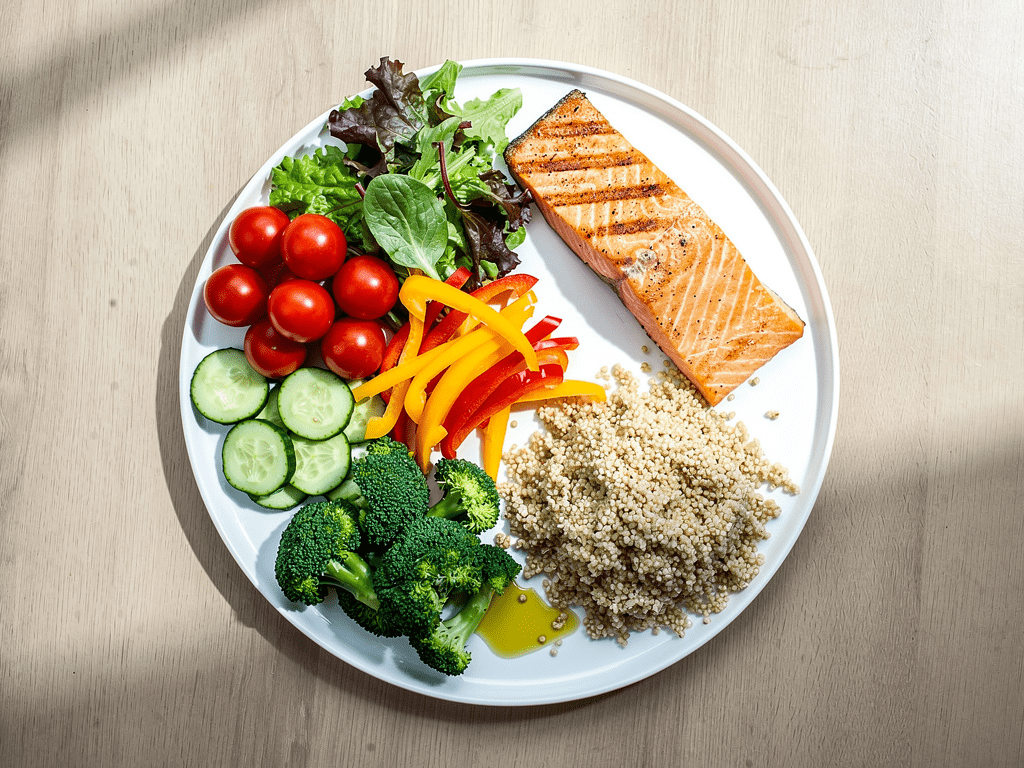
Magnesium (chocolate, nuts, bananas) relaxes muscles and reduces irritability. Calcium (dairy, sesame) reduces bloating. Complex carbs (buckwheat, brown rice) help serotonin reach your brain. But caffeine, salt, and sugar in the luteal phase are enemies: caffeine increases anxiety, salt retains water, sugar gives you a spike and then a mood crash.
I’m 40+ and my cycle has become unpredictable — is this perimenopause?
Most likely yes. Perimenopause starts 5–10 years before your last period, and the first sign is cycle instability. Add hot flashes, night sweats, and sleep quality to your tracking. A gynecologist can order FSH and estradiol tests.